Workplace Violence Prevention for Canadian Employers
Workplace Violence Prevention in Canada: How Security Guards Support BC, Alberta and Ontario Employers
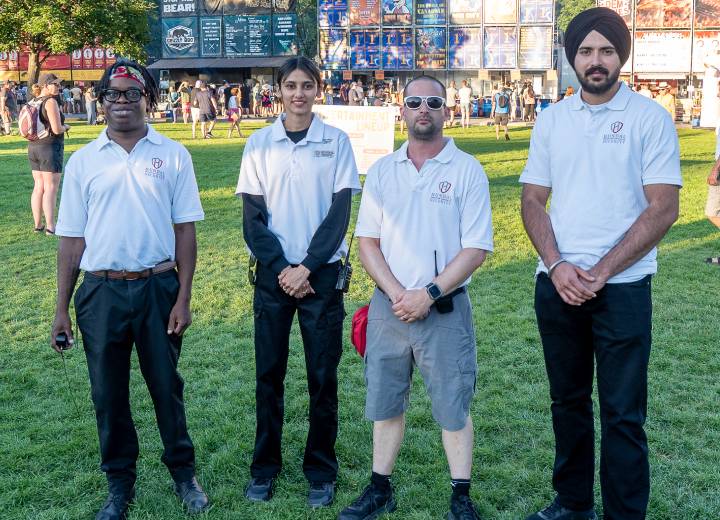
Workplace violence prevention is not only an HR concern. For retailers, healthcare facilities, construction sites, offices, residential properties and public-facing businesses, it is an operational safety issue that requires clear procedures, trained people and a reliable response plan. A professional security guard can support that plan—but security should complement, not replace, an employer's legal duties and broader health and safety program.
This guide explains how businesses in British Columbia, Alberta and Ontario can use security services to reduce risk, protect workers and respond more consistently to incidents. Requirements vary by province and industry, so employers should confirm current obligations with the relevant provincial authority.
What is workplace violence prevention?
Workplace violence prevention is the process of identifying situations that could lead to violence, taking steps to eliminate or reduce those risks, training workers, and responding properly when an incident occurs. It can include threats, intimidation, physical assaults, aggressive behaviour, robbery-related violence and—in some workplaces—violence from patients, clients, customers or members of the public.
A strong program normally includes:
- A written workplace violence policy
- A site-specific risk assessment
- Access control and visitor-management procedures
- Training for workers, supervisors and security personnel
- A method for reporting, investigating and documenting incidents
- Emergency communication and escalation procedures
- Regular review after incidents, near misses or operational changes
How security guards support a prevention program
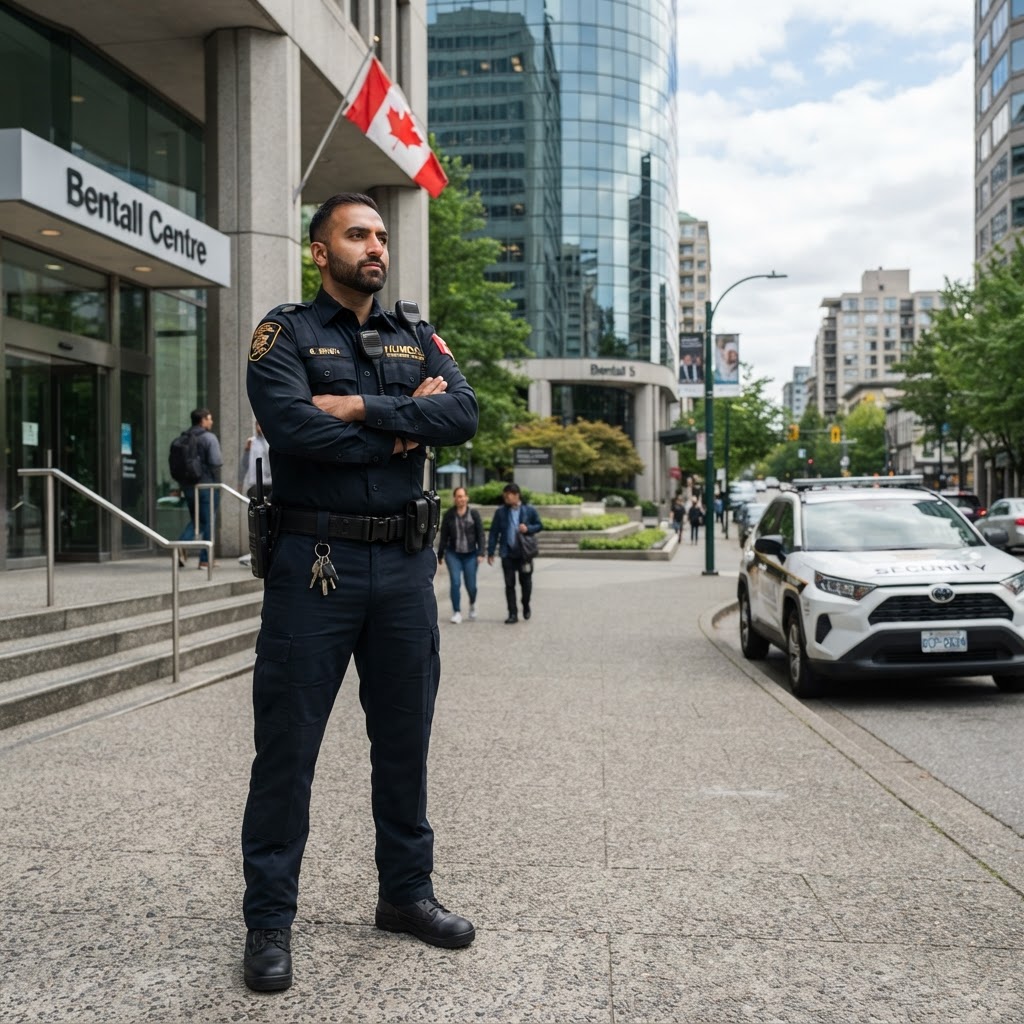
Security guards are most effective when their post orders are connected to the employer's risk assessment. Depending on the site, a licensed guard may provide:
Visible deterrence
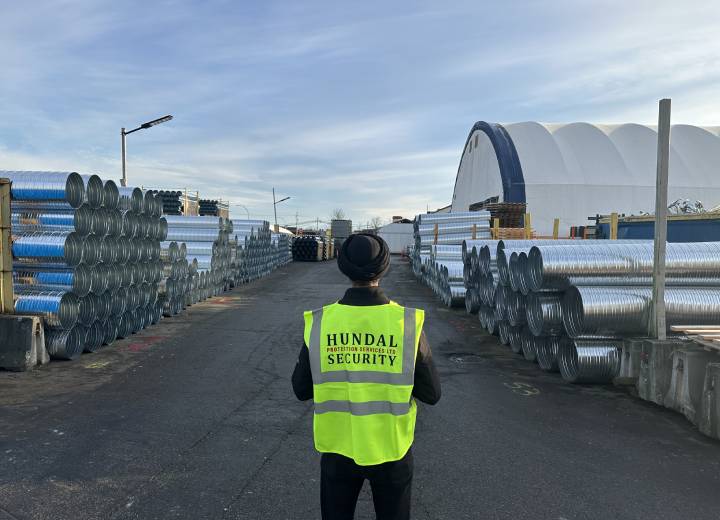
A trained, professional presence at entrances, parking areas, loading bays or customer-service zones can discourage trespassing, theft and aggressive behaviour before it escalates. Visibility is especially useful at retail stores, shopping centres, construction sites and properties with recurring after-hours incidents.
Access control and identification
Guards can check credentials, manage visitor sign-in, enforce restricted-area procedures and escalate suspicious activity. This helps businesses control who enters a workplace and gives employees a consistent process for dealing with unauthorized visitors.
De-escalation and communication
Security personnel should be trained to communicate calmly, maintain safe positioning and follow defined escalation procedures. Their role is not to “win” an argument; it is to create time and space, protect people, call emergency services when necessary and document what happened.
Patrols and hazard reporting
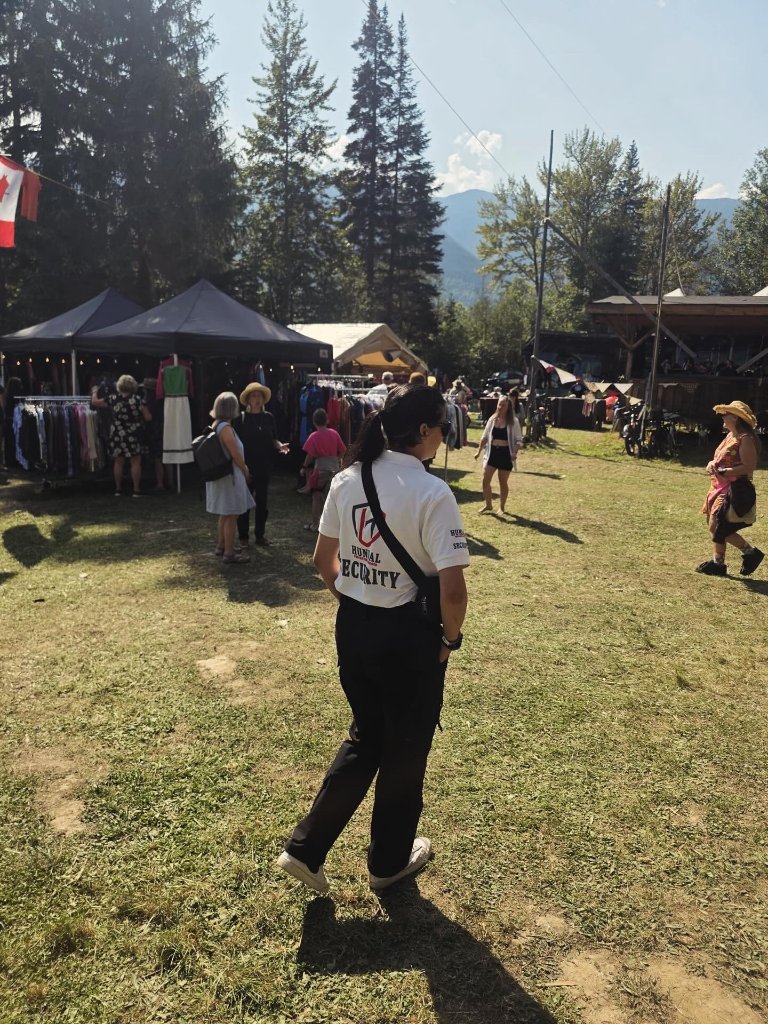
Mobile or on-site patrols can identify unsecured doors, poor lighting, damaged fencing, loitering, unsafe areas and signs of attempted entry. A useful patrol report turns those observations into corrective actions for the property manager or employer.
Incident response and documentation
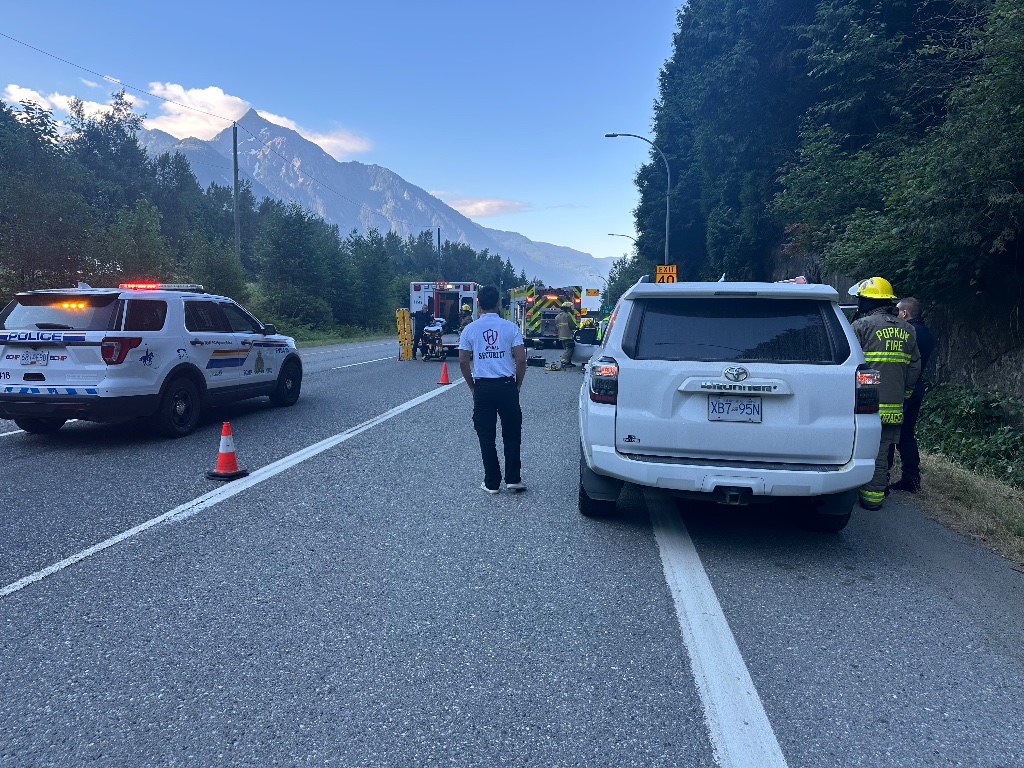
When an incident occurs, guards can follow the site's emergency plan, notify designated contacts, preserve relevant information, support safe evacuation and complete an objective occurrence report. Good documentation helps the employer investigate and improve the prevention program.
Provincial considerations for Canadian employers
British Columbia
WorkSafeBC says employers must provide a workplace as safe from the threat of violence as possible. Where a risk exists, employers are expected to assess it and establish procedures to eliminate or minimize the risk. WorkSafeBC identifies key program elements such as a written policy, prevention procedures, training, incident reporting and investigation, follow-up and program review.
For a BC business, a security provider should be able to explain how guards will work within the employer's violence-prevention program. Confirm that assigned personnel hold the appropriate BC security worker licence, understand the post orders and know when to contact supervisors, police, medical services or the client's emergency contact.
Alberta
Alberta treats workplace violence and harassment as workplace hazards. Employers must develop prevention plans as required under Alberta's Occupational Health and Safety framework. A security contract should therefore be tied to the employer's hazard assessment, worksite procedures and reporting process—not treated as a stand-alone purchase.
Calgary, Edmonton and industrial sites across Alberta may also face unique conditions such as large properties, remote work areas, overnight shifts and severe weather. Ask providers how they handle lone-worker check-ins, patrol verification, radio communication, winter access and response coordination.
Ontario
Ontario's Occupational Health and Safety Act includes workplace violence and harassment requirements. Employers should assess risks arising from the nature of the workplace, the type of work and the conditions under which work is performed, then establish measures and procedures appropriate to the workplace. Ontario guidance also recognizes security precautions such as guards, cameras and response procedures as possible controls in certain settings.
Ontario employers should confirm that guards are licensed under the province's private security rules and that the provider's training, supervision and reporting standards match the site. Hospitals, long-term-care settings, schools, retail locations and residential buildings may each require different post orders and response boundaries.
How to choose a workplace security company
Before hiring, ask these questions:
- Are the company and assigned guards properly licensed for the province? Request licence details and confirm any requirements that apply to the assignment.
- What does the risk assessment say? A reputable provider should ask about incident history, hours, access points, vulnerable areas and emergency contacts before quoting.
- How are guards trained and supervised? Ask about de-escalation, report writing, first aid, radio procedures and supervisor check-ins.
- What happens during an incident? Get the escalation chain, response expectations, documentation process and boundaries of the guard's role in writing.
- How will performance be measured? Useful measures can include patrol completion, response documentation, access-control exceptions, incident trends and client review meetings.
Avoid choosing only on the lowest hourly rate. An under-scoped assignment, inconsistent coverage or weak reporting can cost more than a properly designed security program.
Frequently asked questions
Do security guards replace a workplace violence prevention program?
No. Security guards are one possible control within a broader program. Employers still need to identify hazards, establish procedures, train workers, investigate incidents and review whether controls are working.
Should every Canadian business hire a security guard?
Not necessarily. The appropriate control depends on the site's risk assessment. Some businesses may need scheduled mobile patrols, improved lighting and access control; others may need a full-time guard, concierge coverage or event security.
What should be included in security guard post orders?
Post orders should explain the guard's responsibilities, patrol routes, access rules, prohibited actions, emergency contacts, reporting requirements, shift handoff process and escalation thresholds. They should be reviewed whenever the workplace or risk profile changes.
How often should an employer review its security plan?
Review it after an incident, near miss, major operational change, renovation, new tenant, change in hours or change in the type of people accessing the site. A scheduled review can also identify gaps before they become emergencies.
A practical next step
Start with a site walk-through and a documented risk assessment. Then ask a licensed security company to recommend the least intensive control that addresses the identified risks—whether that is mobile patrol, access control, event security, overnight coverage or a dedicated guard.
Hundal Protection Services helps organizations across British Columbia, Alberta and Ontario plan professional security coverage around their real operating conditions. Contact the Hundal Protection Team to discuss a site-specific security assessment and response plan.
Sources: WorkSafeBC, “Violence”; Government of Alberta, “Workplace violence and harassment”; Government of Ontario, “Understand the law: workplace violence and harassment.” This article is general information, not legal advice. Verify current provincial requirements before implementing a program.
Related Security Services

Written by
Hundal Protection Team
Security industry professional at Hundal Protection Services — a licensed multi-province security guard company serving BC, Alberta & Ontario since 2020. Our team holds valid security licences under BC, Alberta and Ontario regulations, carries $5M liability insurance, and maintains a 5.0 Google rating. All content is reviewed for accuracy and compliance with Canadian security industry standards.