Retail Loss Prevention Cost vs ROI Guide Canada
Retail Loss Prevention Cost vs ROI Guide Canada 2026
Retail shrinkage is one of the most persistent challenges facing Canadian store owners and retail managers. Whether you operate a single boutique in Surrey or a multi-location chain across the Lower Mainland, understanding the true cost — and return — of loss prevention is critical to protecting your bottom line.
This guide breaks down what retail loss prevention actually costs in Canada in 2026, what it realistically saves, and how to calculate whether it makes financial sense for your business.
The True Cost of Retail Shrinkage in Canada
According to the Retail Council of Canada, shrinkage (theft, fraud, administrative errors, and vendor fraud) accounts for approximately 1.4%–2% of annual retail sales. For a store generating $1 million in revenue, that's $14,000–$20,000 lost every year — before a single loss prevention measure is in place.
Shrinkage breaks down roughly as follows:
- Shoplifting / external theft: 35–40%
- Employee theft: 28–35%
- Administrative errors: 20–25%
- Vendor fraud: 5–6%
This means the majority of losses are preventable with the right combination of people, technology, and training.
What Does Retail Loss Prevention Cost in Canada (2026)?
1. Security Guards
Hiring professional retail security guards in Canada typically runs:
- $22–$35/hour for standard retail floor presence
- $35–$55/hour for licensed, experienced loss prevention officers
- $5,000–$15,000/month for full-time, dedicated LP programs at larger retail locations
For part-time or flex coverage (peak hours, weekends, holidays), many retailers spend $2,000–$6,000/month.
If you need patrols across a shopping plaza or multiple storefronts, a Mobile Patrol service can be a cost-effective alternative to stationary guards at every location.
2. CCTV & Surveillance Technology
- Basic CCTV system (8–16 cameras): $3,000–$8,000 installed
- Advanced AI-powered analytics cameras: $10,000–$30,000+
- Monthly monitoring fees: $100–$500/month
- Annual maintenance: $500–$2,000
Modern systems with facial recognition, heatmapping, and POS integration dramatically improve detection rates — but come at a premium.
3. Employee Training
- Shrinkage awareness training: $500–$2,000 per session
- LP certification programs: $1,500–$5,000 per employee
- Annual refresher training: $300–$800/employee
Training is often the most underinvested area, yet studies consistently show it delivers some of the highest ROI in loss prevention.
4. Electronic Article Surveillance (EAS)
- EAS system installation: $3,000–$12,000
- Tags & consumables: $0.10–$0.50 per tag
- Annual maintenance: $500–$1,500
What Does Loss Prevention Save?
Direct Savings
Well-implemented loss prevention programs reduce shrinkage by 30–60% on average, according to industry benchmarks. For a retailer losing $20,000/year to shrinkage:
- A 30% reduction = $6,000/year saved
- A 50% reduction = $10,000/year saved
- A 60% reduction = $12,000/year saved
Indirect & Intangible Savings
- Reduced insurance premiums: Many Canadian insurers offer 5–15% discounts for documented LP programs
- Lower staff turnover: A safer environment improves employee retention
- Fewer false accusation liability risks: Trained guards reduce wrongful detention lawsuits
- Deterrence multiplier: Visible security deters opportunistic theft before it happens
- Better inventory accuracy: Fewer shrinkage incidents mean cleaner inventory data and reduced over-ordering
ROI Calculation: When Does Loss Prevention Pay for Itself?
Here's a simplified ROI model for a mid-size Canadian retailer:
| Item | Annual Cost | |---|---| | Part-time security guard (20 hrs/week @ $28/hr) | $29,120 | | CCTV system (amortized over 5 years) | $1,600 | | EAS system (amortized over 5 years) | $1,800 | | Annual training | $1,200 | | Total LP Investment | $33,720 |
| Item | Annual Saving | |---|---| | Shrinkage reduction (50% of $40,000 loss) | $20,000 | | Insurance premium reduction (10%) | $1,800 | | Avoided incident/liability costs | $3,000 | | Total Estimated Savings | $24,800 |
In this example, the retailer still has a net cost — but if shrinkage is higher (common in high-volume or high-theft categories like electronics, fashion, or liquor), the math often flips entirely in favour of LP investment.
For retailers with $50,000+ in annual shrinkage, a comprehensive LP program almost universally pays for itself within 12–18 months.
Which Loss Prevention Strategy Gives the Best ROI?
| Strategy | Upfront Cost | Annual Cost | Shrinkage Reduction | |---|---|---|---| | Security guards (part-time) | Low | $25K–$40K | 30–50% | | CCTV only | Medium | $2K–$5K | 15–25% | | EAS only | Medium | $2K–$4K | 20–35% | | Training only | Low | $1K–$3K | 10–20% | | Combined program | Higher | $35K–$60K | 50–65% |
The data is clear: combined programs consistently outperform single-measure approaches, delivering the highest shrinkage reduction and the strongest long-term ROI.
Is a Dedicated LP Officer Worth It vs. Uniformed Security?
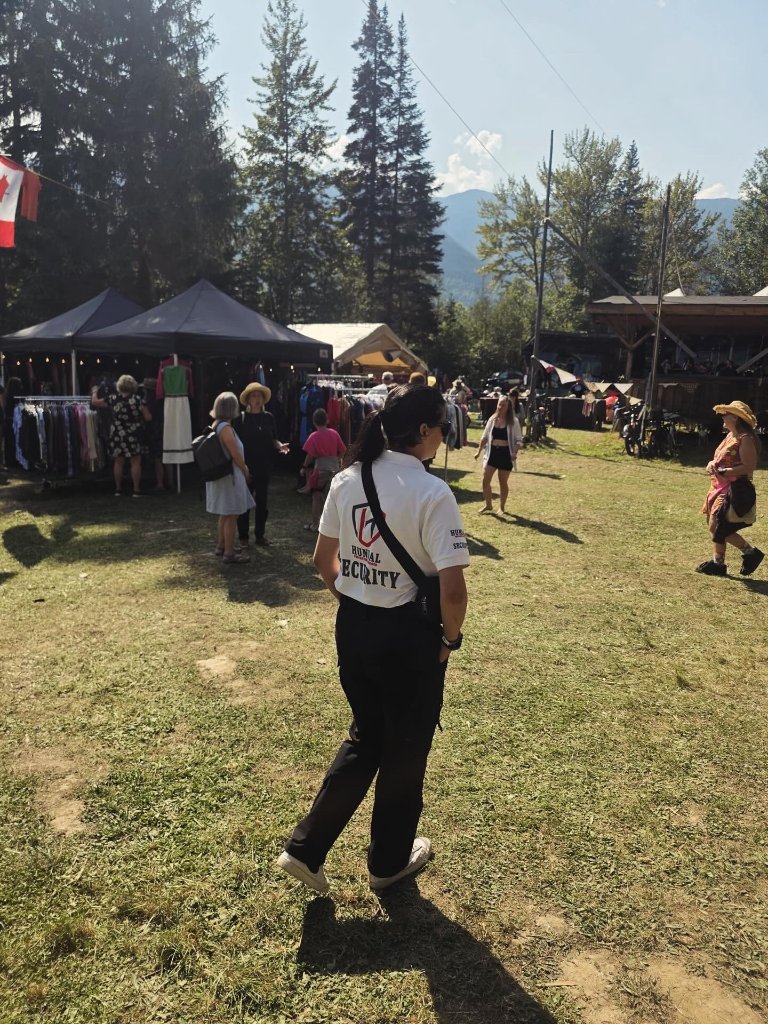
Dedicated loss prevention officers (plain-clothes, trained in surveillance and apprehension) are ideal for high-theft retailers. Uniformed security guards, on the other hand, offer strong deterrence value — shoplifters are less likely to attempt theft when a guard is visibly present.
For many Canadian retailers, the right answer is a hybrid approach: uniformed guards during peak hours for deterrence, combined with camera-based monitoring during off-hours.
If your business spans multiple properties or parking areas, consider supplementing your in-store presence with a Mobile Patrol service for cost-effective wide-area coverage.
Special Considerations for Canadian Retailers (2026)
- Organized Retail Crime (ORC) is rising sharply in major Canadian metros. RCMP and local police increasingly recommend professional LP partners rather than relying on staff intervention.
- Bill C-75 implications: Under Canadian law, citizen's arrest rules are strict. Retailers need trained, licensed security personnel to legally detain shoplifting suspects.
- Privacy legislation (PIPEDA/provincial): CCTV usage and data retention must comply with Canadian privacy law. A professional security provider ensures compliance.
- Seasonal spikes: The holiday season (November–January) and back-to-school (August–September) are peak shrinkage periods. Scaling LP coverage during these windows significantly improves annual ROI.
How Hundal Protection Services Can Help
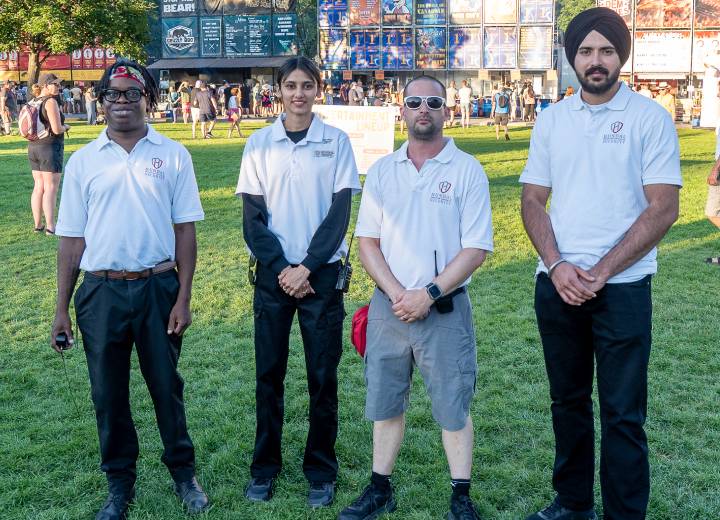
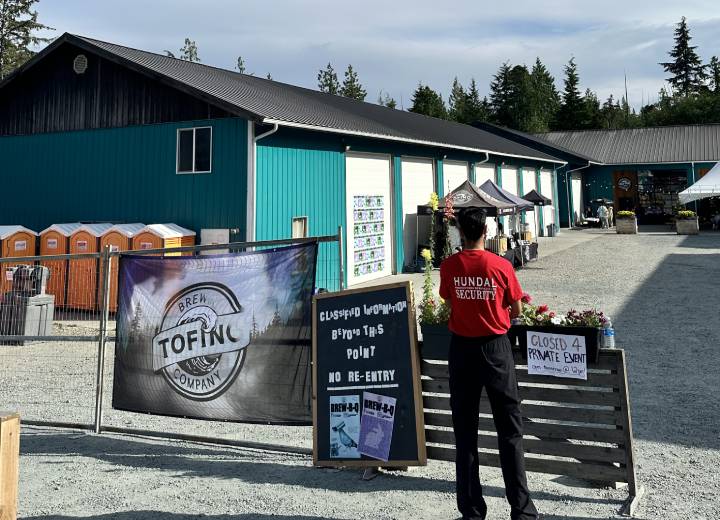
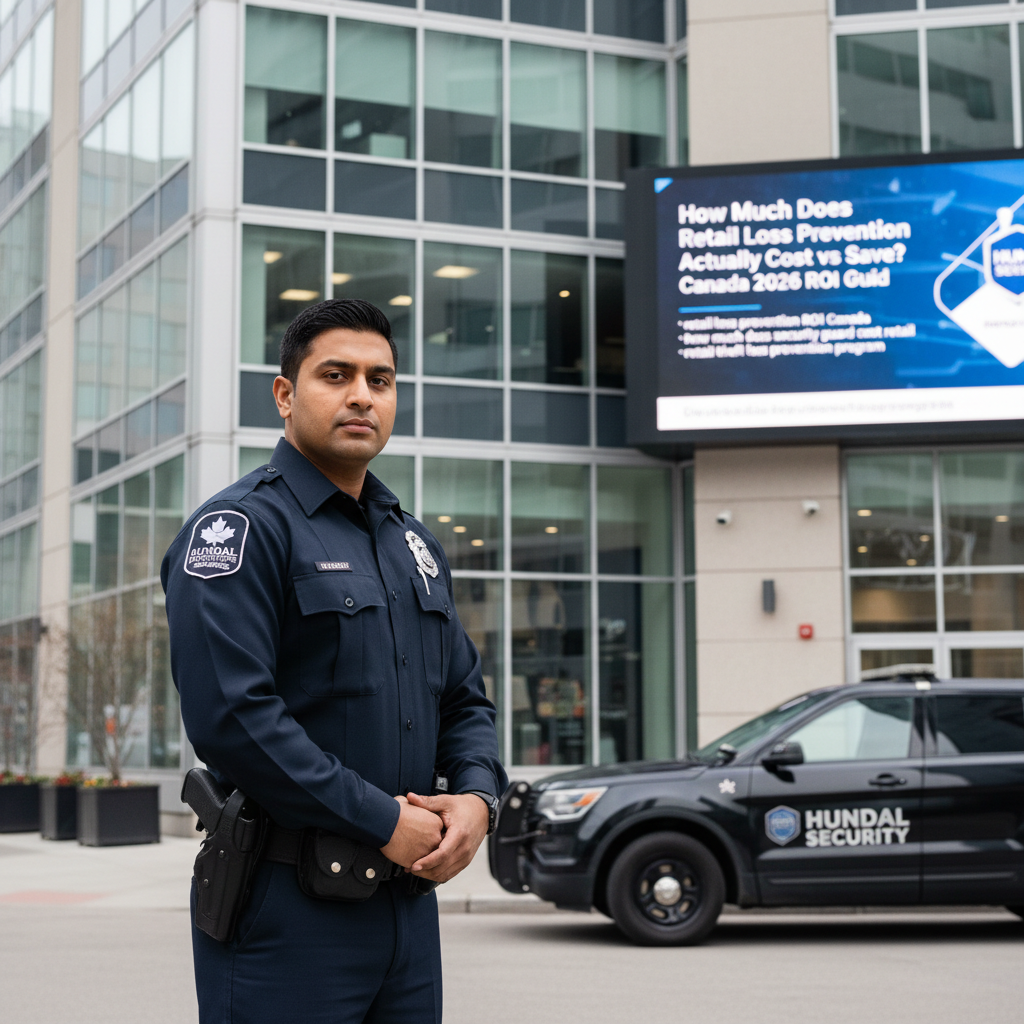
Hundal Protection Services (hundalprotects.ca) provides professional, licensed retail security and loss prevention services across the Lower Mainland and Metro Vancouver. Our retail security team combines uniformed deterrence, plain-clothes monitoring, and mobile patrol options to deliver a loss prevention program tailored to your store's size, layout, and shrinkage risk.
We work with retailers of all sizes — from independent shops to large-format stores — to design cost-effective LP programs that deliver measurable ROI. Whether you need coverage for a single location, a seasonal event, or ongoing year-round protection, we can help.
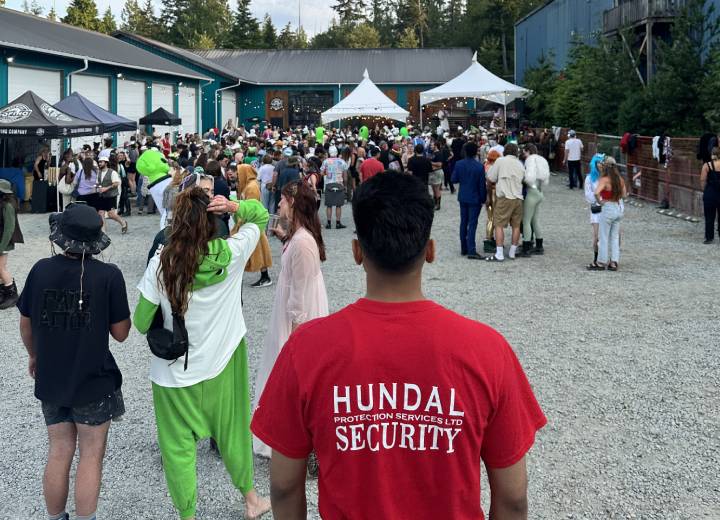
For special retail events or grand openings, our Event Security team can provide additional crowd management and theft deterrence support.
Ready to find out what a customized loss prevention program would cost — and save — for your business? Contact Hundal Protection for a free, no-obligation consultation.
Frequently Asked Questions
How much does retail loss prevention cost for a small store in Canada? For a small Canadian retailer, a basic loss prevention setup typically runs $2,000–$6,000/month when including part-time security guard hours, a basic CCTV system, and minimal EAS tagging. Many small stores start with camera systems and staff training before scaling to guard coverage. The right approach depends on your shrinkage rate, store layout, and product category. A security provider like Hundal Protection can assess your risk and recommend a cost-proportionate solution.
What is the average retail shrinkage rate in Canada? Canadian retailers experience average shrinkage rates of 1.4%–2% of gross annual sales, according to the Retail Council of Canada. High-theft categories like electronics, cosmetics, liquor, and fashion can see rates of 3%–5% or higher. Organized Retail Crime (ORC) is increasingly contributing to elevated shrinkage in Metro Vancouver and other major Canadian cities. Tracking your actual shrinkage rate through inventory audits is the first step toward calculating your LP ROI.
Do security guards actually reduce shoplifting in Canadian retail? Yes — visible, professional security guards are one of the most effective deterrents against opportunistic shoplifting. Studies consistently show that uniformed guard presence reduces external theft by 30–50% on its own. In the Canadian legal context, licensed security guards are also the only personnel who can lawfully conduct a citizen's arrest under the Criminal Code, protecting your business from liability. Combined with CCTV and EAS, guards form the cornerstone of high-performance loss prevention programs.
When does loss prevention pay for itself in retail? For most Canadian retailers losing $30,000 or more annually to shrinkage, a professional loss prevention program typically reaches break-even within 12–18 months. High-volume or high-theft stores often see positive ROI within the first 6–9 months. Beyond direct shrinkage savings, indirect benefits — including insurance reductions, lower staff turnover, and avoided liability — further accelerate the payback timeline. The key is matching your LP investment level to your actual shrinkage exposure.
What's the difference between a loss prevention officer and a security guard for retail? A loss prevention (LP) officer is typically plain-clothes trained and specializes in surveillance, evidence gathering, and apprehension procedures specific to retail theft. A uniformed security guard primarily provides visible deterrence and a rapid response presence on the retail floor. Both roles are valuable: LP officers excel at catching repeat or organized offenders, while uniformed guards deter opportunistic theft and create a safer shopping environment. Many Canadian retailers benefit from a hybrid model combining both for maximum coverage and ROI.

Written by
Hundal Protection Team
Security industry professional at Hundal Protection Services — a licensed multi-province security guard company serving BC, Alberta & Ontario since 2020. Our team holds valid security licences under BC, Alberta and Ontario regulations, carries $5M liability insurance, and maintains a 5.0 Google rating. All content is reviewed for accuracy and compliance with Canadian security industry standards.