How Many Security Guards Does Your Business Need?
How Many Security Guards Does Your Business Need in Canada? A Practical Guide
One of the first questions Canadian business owners ask when planning security is simple: How many security guards do I need? The answer depends on your property, operating hours, risk level and the duties you want your team to perform. Hiring too few guards can leave gaps in coverage, while hiring more people than necessary can inflate your security budget.
This guide explains how to estimate the right level of security for businesses in British Columbia, Alberta and Ontario. It is a practical starting point—not a replacement for an on-site security risk assessment.
Quick answer: how many guards do most businesses need?
A small, low-risk commercial property may need one security guard during its busiest hours or a mobile patrol instead of a full-time post. A retail store may need one loss-prevention guard per location, while a large construction site, event or industrial facility may require several guards per shift.
The key question is not just the size of your property. It is whether one guard can safely complete every required task without leaving important areas unattended.
Five factors that determine guard coverage
1. Property size and layout
A compact office lobby is easier for one guard to monitor than a multi-building industrial yard. Consider entrances, parking areas, loading bays, stairwells, exterior gates and blind spots. A guard cannot be in two places at once, so large or divided sites often need multiple fixed posts or scheduled patrols.
Create a simple map of the property and mark every location that must be checked. This quickly shows whether one person can realistically complete the patrol route within the required time.
2. Operating hours and shift length
Decide when security is actually required. Some businesses need coverage 24 hours a day, while others mainly need protection overnight, at opening and closing, or during peak customer traffic.
For continuous coverage, plan for staffing relief, vacation coverage and sick days—not just one guard assigned to each clock hour. A reliable security company can build a schedule that prevents fatigue and avoids uncovered shifts.
3. Risk level and incident history
A business with repeated theft, trespassing, vandalism, workplace violence or unauthorized access needs a different plan from a low-risk office. Review incident reports, police calls, alarm activations and employee concerns. The pattern may show that you need a second guard during specific hours rather than identical coverage all day.
Risk can also change seasonally. Construction sites may face more theft after materials arrive. Retailers may need extra loss-prevention support during holiday shopping. Property managers may require additional coverage during move-in periods or building repairs.
4. Guard responsibilities
List every duty you expect the guard to perform. Common responsibilities include access control, visitor registration, CCTV monitoring, patrols, alarm response, incident reporting, traffic direction, emergency coordination and customer service.
One guard can often manage a defined lobby post and occasional patrols. It becomes harder when the same person must monitor cameras, escort contractors, inspect a large exterior area and respond to incidents at the same time. Clear priorities help determine whether another guard is necessary.
5. Legal, safety and site requirements
Security workers in Canada must meet the licensing requirements of the province where they work. British Columbia, Alberta and Ontario each have their own rules for security workers and security businesses. Your staffing plan should also consider occupational health and safety, lone-worker risks, emergency exits and any requirements from your insurer, landlord or regulator.
For higher-risk assignments, ask whether guards need additional training such as first aid, de-escalation, occupational safety, access-control procedures or specialized industrial orientation.
Typical staffing examples
These examples can help you start the conversation with a security provider:
- Small office or professional building: One guard during opening, closing or overnight hours, supported by mobile patrols when a constant post is not needed.
- Retail store: One loss-prevention or uniformed guard during high-risk periods. Larger stores may need separate coverage for entrances, sales floors and stock areas.
- Condominium or strata property: One concierge-security guard at the main entrance, with scheduled patrols for parking and common areas. Multiple towers or large underground parks may require additional coverage.
- Construction site: One overnight guard for a compact, well-lit site, or two or more guards for a large site with multiple access points, valuable equipment and active work zones.
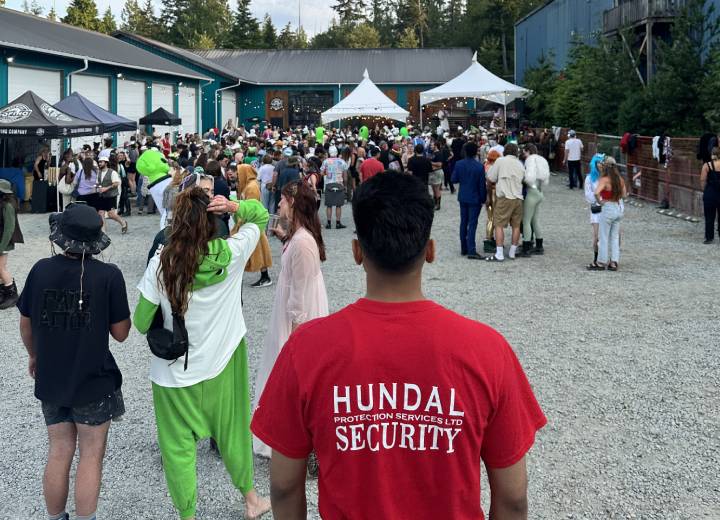
- Event: Staffing based on attendance, venue layout, entrances, alcohol service, crowd movement and emergency procedures. An event security plan should include supervisors and relief coverage where appropriate.
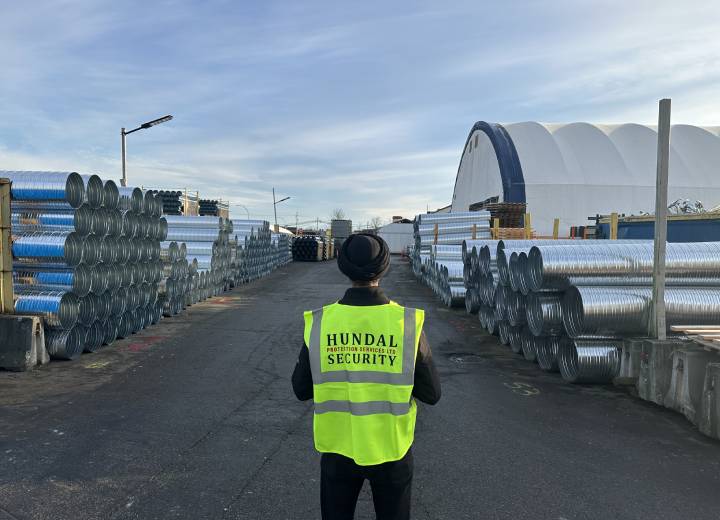
- Industrial or warehouse facility: One or more guards for gatehouse access control, truck movements, perimeter patrols and incident response.
These are starting points only. A qualified provider should adjust coverage after reviewing your site and operating procedures.
When mobile patrol may be better than a full-time guard
If you need deterrence and regular checks but do not require a person at a desk or gate all night, mobile patrol can be a cost-effective option. A marked patrol vehicle can visit your property at randomized or scheduled intervals, inspect doors and fencing, document conditions and respond to alarms.
Mobile patrol is not a substitute for a fixed guard when you need continuous access control, customer service or immediate intervention. Many Canadian businesses use a hybrid plan: a static guard during peak hours and mobile patrol overnight.
Questions to ask before choosing a staffing plan
Ask your security company: What happens if a guard is responding to an incident? Who covers the post during breaks? How quickly can a supervisor attend? How are patrols verified? What reports will you receive? Does the quote include management, uniforms, equipment and relief coverage?
The best security plan is measurable. Request post orders, shift schedules, patrol checkpoints and incident-reporting procedures in writing. Review the plan after the first 30 days and adjust it using real data.
Frequently asked questions
Is one security guard enough for a business?
Sometimes. One guard may be suitable for a defined post or small site with limited duties. If the property has multiple entrances, large outdoor areas or simultaneous responsibilities, one guard may not provide dependable coverage.
Is it cheaper to hire two guards for shorter shifts?
Not always. The right choice depends on your peak-risk hours, shift minimums and required continuity. A security provider can compare a full-shift model with targeted coverage and mobile patrol.
Should security guards work alone?
Lone-worker assignments can be appropriate for some low-risk sites, but they require communication, check-in procedures, emergency escalation and a realistic response plan. Higher-risk environments may require two-person coverage.
How can I reduce security costs without reducing protection?
Start with a risk assessment. Improve lighting, locks, cameras, fencing and access procedures, then align guard hours with documented risk. Technology and patrols can supplement guards, but they should support—not replace—a clear security plan.
Build the right plan for your Canadian property
The right number of security guards is the smallest team that can safely complete every required duty, maintain coverage during incidents and provide a dependable response. For businesses in BC, Alberta and Ontario, local licensing knowledge and site experience matter just as much as the hourly rate.
Hundal Protection Services can help assess your property and design coverage around your hours, risks and budget. Whether you need a uniformed guard, loss-prevention support, mobile patrol or a complete multi-site plan, request a customized consultation before choosing a staffing level.
Related Security Services

Written by
Hundal Protection Team
Security industry professional at Hundal Protection Services — a licensed multi-province security guard company serving BC, Alberta & Ontario since 2020. Our team holds valid security licences under BC, Alberta and Ontario regulations, carries $5M liability insurance, and maintains a 5.0 Google rating. All content is reviewed for accuracy and compliance with Canadian security industry standards.